Fiberglass pool installation involves preparing the property, excavating the pool area, creating a stable base, placing the manufactured shell, connecting plumbing and equipment, backfilling around the pool and completing the surrounding area. Because the shell arrives as one large piece, backyard access and accurate site preparation matter from the beginning. Myrtle Beach homeowners should understand the full installation process before choosing a fiberglass pool or scheduling construction.
What Happens First During Fiberglass Pool Installation?
Fiberglass pool installation starts with planning the site before excavation begins. The builder needs to confirm the pool location, access route, equipment area, drainage and any property conditions that could affect construction. Homeowners should know how the pool shell will reach the backyard, where construction equipment will enter and what parts of the yard need to stay clear.
This early planning matters because the fiberglass shell arrives as a completed structure. Crews cannot simply carry it through a narrow gate or make major changes to the shell after delivery. Trees, fences, overhead lines, tight side yards and other obstacles all need to be considered before the pool gets ordered and the installation date arrives.
How Is The Pool Area Excavated?
Excavation creates the space where the fiberglass shell will sit. Crews dig the area based on the pool model, dimensions and installation specifications. The excavation needs enough room for the shell, base material, plumbing and backfill.
The shape and depth of the excavation need to match the pool closely so the shell sits correctly after placement. Property conditions can also affect this stage. Slope, drainage, soil conditions and nearby structures can influence how the site gets prepared. Heavy rain can also change ground conditions, which is one reason Myrtle Beach pool projects need some flexibility during the construction process.
What Goes Under A Fiberglass Pool?
A fiberglass pool needs a stable, properly prepared base that supports the shell and helps it sit level. The exact base material and installation method depend on the pool manufacturer and project specifications, so homeowners should not assume that every fiberglass pool uses the same setup.
The base matters because the pool shell relies on the prepared site for support. Small mistakes at this stage can affect how the pool sits and how water levels look once the pool fills. Accurate preparation is one of the reasons professional fiberglass pool installation matters. This stage should follow the requirements for the specific pool rather than a generic installation method.
How Does The Fiberglass Pool Shell Get Into The Backyard?
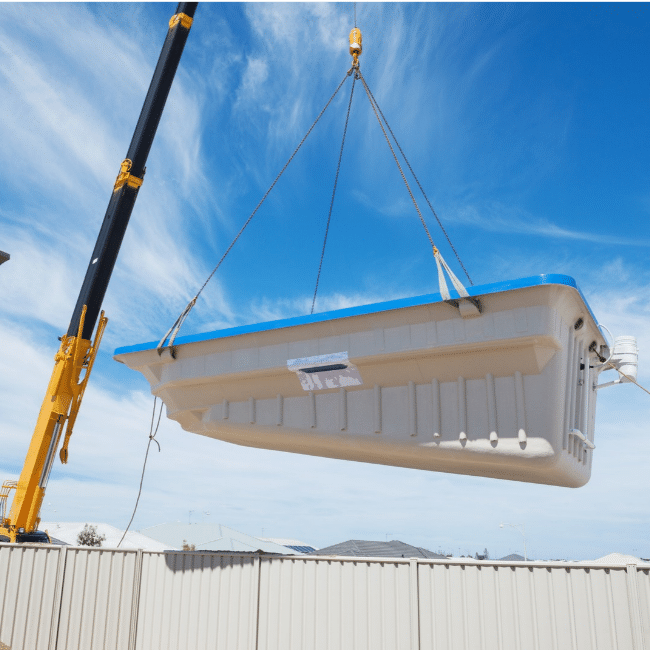
The fiberglass shell usually arrives at the property as one large piece and needs a clear route to the installation area. Depending on the property and pool, specialized equipment can help lift or move the shell into position.
This is why backyard access deserves attention before homeowners choose a specific pool model. A pool might fit beautifully in the finished yard but still create problems if the shell cannot reach the site. Fences, gates, buildings, trees and overhead obstacles can all affect the delivery route.
Elko Spas, Billiards and Pools can help homeowners compare Alaglas and Imagine Pools with actual property access in mind rather than choosing a design first and discovering delivery problems later.
How Is The Pool Shell Positioned?
Once the shell reaches the excavation, crews carefully lower and position it into the prepared area. The pool needs to sit level and align correctly with the planned layout before the project moves forward.
Positioning affects more than appearance. It can influence plumbing connections, decking, drainage and how the pool relates to the surrounding backyard. This is also the point when careful measurements and planning become visible in the finished project. A few feet of placement can change walking space, furniture layout or the connection between the pool and the house.
When Does Pool Plumbing Get Installed?
Pool plumbing gets connected as part of the installation process after the shell gets positioned. Plumbing moves water between the pool and equipment such as the pump and filter, so the layout needs to support strong circulation and practical equipment access.
Equipment placement should also be planned before this stage. Homeowners do not want to discover after installation that the equipment sits where they planned to add seating, landscaping or another backyard feature. Good pool design connects plumbing and equipment decisions with the overall outdoor layout instead of treating them as technical details that happen later.
What Is Backfill And Why Does It Matter?
Backfill is the material placed around the outside of the fiberglass shell after it sits in position. The backfill helps support the pool walls and fills the space between the shell and surrounding ground.
This stage needs to happen carefully so the shell receives even support. Installation methods can vary based on the manufacturer and site, which means crews should follow the correct process for the specific pool. Water can also get added to the pool during parts of the process so pressure inside and outside the shell stays properly managed.
Backfill is not the most visible part of fiberglass pool installation, but it plays an important role in supporting the finished pool.
What Happens To The Pool Equipment?
Pool equipment gets installed and connected so the system can circulate, filter and manage the water. The equipment setup can include the pump, filter and other components based on the pool design.
Homeowners should understand where this equipment will go and how they will access it for routine service. Equipment needs enough room for maintenance and repair, so hiding it too tightly behind landscaping or structures can create problems later. A practical location should balance appearance, access and function.
How Does Drainage Affect Fiberglass Pool Installation?
Drainage affects fiberglass pool installation because water needs to move properly around the property before and after construction. Myrtle Beach and Grand Strand homes can receive heavy rainfall, so the pool project should not create new areas where stormwater collects.
The builder should consider the existing grade, surrounding yard and finished areas when planning the project. Decking, landscaping and other improvements can also change how rainwater moves across the property. Thinking about drainage early helps the pool fit into the yard instead of creating a separate water-management problem.
What Happens After The Pool Shell Is Installed?
After the shell, plumbing and equipment are in place, the project moves into finishing work and startup. The exact steps depend on the design, but homeowners can expect the surrounding area to come together, equipment to get checked and pool systems to get prepared for use.
The water also needs proper testing and balancing before regular swimming begins. This stage marks the transition from construction into ownership. Homeowners should understand basic water care, filtration and equipment operation so they know how to protect the pool after installation ends.
How Long Does Fiberglass Pool Installation Take?
The exact fiberglass pool installation timeline depends on property conditions, access, weather, project complexity and surrounding work. The shell itself can go into place relatively quickly once the site is ready, but the full project includes much more than placing the pool in the ground.
Homeowners should get a project-specific timeline instead of relying on a generic estimate. Heavy rain, site conditions or additional backyard work can affect scheduling. Elko’s separate fiberglass pool installation timeline resource can help homeowners understand the broader schedule, while this page focuses on what actually happens during the installation itself.
How Does Fiberglass Installation Fit Into Pool Construction?
Fiberglass pool installation is one stage within the larger pool construction process. Before installation starts, homeowners need to choose the pool, evaluate the property, complete the design and prepare the site. After installation, water care, equipment maintenance and long-term service become part of ownership.
That is why the strongest projects start with the whole backyard instead of focusing only on the day the shell goes into the ground. Elko’s Pool Construction Center connects fiberglass pools, pool design, installation, builder selection and long-term service so homeowners can understand how each decision affects the next.
Prepare Your Property Before Installation Day
Fiberglass pool installation works best when the site, access and pool design have already been carefully planned. Excavation, base preparation, shell placement, plumbing, backfill and equipment all need to work together for the finished pool to fit the property properly.
Elko Spas, Billiards and Pools helps Myrtle Beach and Grand Strand homeowners explore Alaglas and Imagine Pools, evaluate their backyards and prepare for fiberglass installation. Contact Elko to discuss your property, pool options and what needs to happen before installation begins.
FAQs
1. How Does A Fiberglass Pool Get Into The Backyard?
A fiberglass pool arrives as a completed shell and needs a clear route to the installation site. Crews can use specialized equipment to move or lift the shell into place, depending on the property. Gates, fences, trees and overhead obstacles should be reviewed before installation.
2. Does A Fiberglass Pool Need Excavation?
Yes. The property needs excavation so the fiberglass shell can sit below ground at the correct depth and position. The excavation also needs room for the pool base, plumbing and backfill around the shell.
3. What Should I Do Before Fiberglass Pool Installation Starts?
Before installation, confirm the pool location, delivery access, equipment area, drainage plan and any property features that could interfere with construction. Good preparation can help reduce delays once excavation and delivery begin.