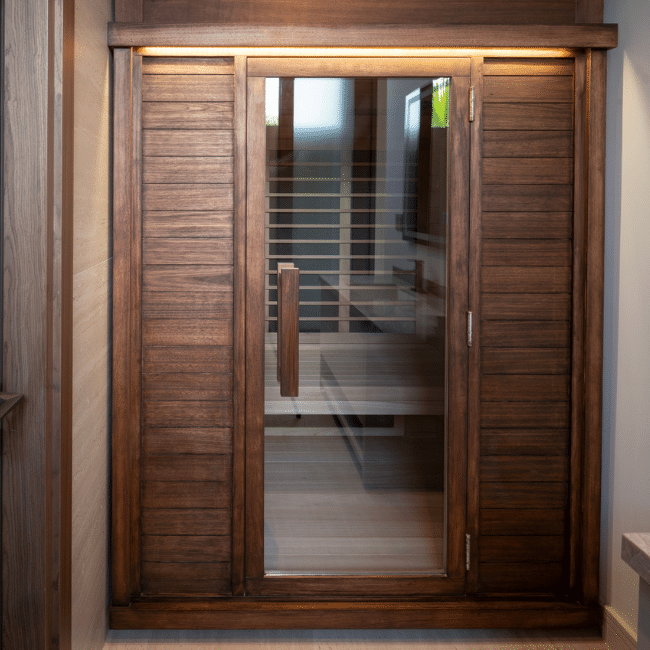
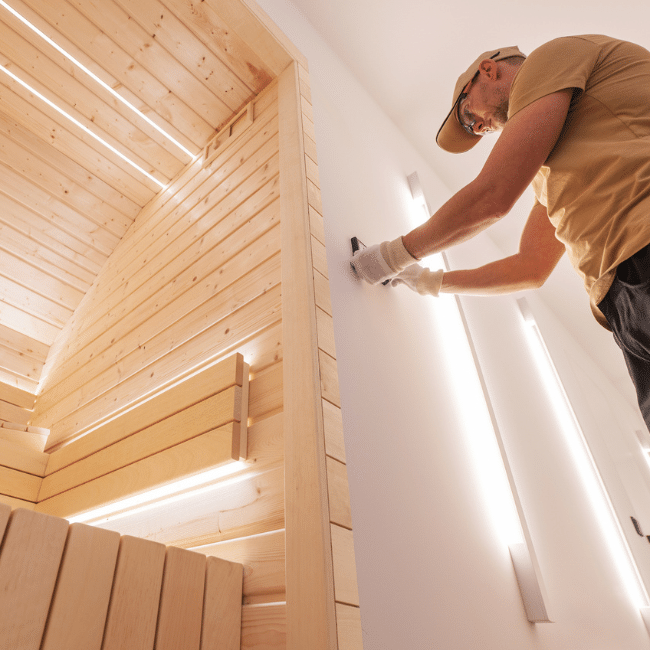
Sauna maintenance includes wiping down surfaces, keeping benches clean and dry, checking ventilation, watching the heater area for debris and paying attention to changes in how the sauna performs. A consistent care routine helps protect the materials, keep the space comfortable and make the sauna easier to enjoy. The exact maintenance needs depend on the sauna, how often you use it and whether it sits indoors or outdoors.
What Does Sauna Maintenance Include?
Sauna maintenance includes regular surface cleaning, bench and floor care, ventilation checks, heater-area inspection and periodic attention to doors, hardware and other components. The goal is not to scrub the sauna aggressively after every use. Instead, homeowners should prevent moisture, sweat, dirt and debris from building up over time. A sauna gets hot by design, so using products or cleaning methods that do not belong in a high-heat environment can create more problems than they solve. Following the care guidance for your specific Tylö sauna gives you the best starting point.
What Should You Do After Each Sauna Session?
After each sauna session, give the sauna time to dry and let moisture leave the space. Wipe away visible sweat or water from benches and other surfaces when needed, remove towels and personal items and make sure nothing blocks normal airflow. Leaving damp towels or other wet items inside can keep moisture trapped longer than necessary.
Simple habits make long-term care easier. Using a clean towel on the bench can reduce the amount of sweat that reaches the wood, while keeping the floor clear helps air move through the space. A few minutes of basic care after use can reduce the need for deeper cleaning later.
How Often Should You Clean A Home Sauna?
You should clean a home sauna based on how often people use it and how much moisture, dirt or residue builds up. A lightly used sauna will not need the same cleaning schedule as one that several family members use throughout the week. Instead of waiting for the sauna to look dirty, inspect benches, walls, floors and high-touch areas regularly.
A good routine includes light cleaning as needed and a more complete inspection at regular intervals. If you notice discoloration, odor, residue or areas that stay damp, address them rather than letting buildup continue. Consistent sauna cleaning usually feels much easier than trying to restore a space after months of neglect.
How Should You Clean Sauna Benches?
Sauna benches should be cleaned gently with methods that protect the wood and avoid leaving harsh residues behind. Start by removing loose debris, then follow the manufacturer’s care directions for the sauna materials. Homeowners should avoid treating sauna wood like an ordinary kitchen counter or bathroom surface because strong household cleaners can leave unwanted residue or affect the material.
Bench care also starts before cleaning. Sitting or lying on a clean towel can help protect the surface from sweat and body oils. Keeping benches dry between sessions helps the sauna stay fresher and can make routine cleaning much simpler.
Why Does Sauna Ventilation Matter For Maintenance?
Sauna ventilation matters because airflow helps the space function properly and dry between uses. If vents become blocked by stored items, dust or debris, the sauna environment might not perform the way it should. Homeowners should keep ventilation openings clear and pay attention to changes in airflow or how the sauna feels during use.
Ventilation also matters outside the sauna itself, especially with an indoor installation. The surrounding room needs to support the sauna setup rather than trap unnecessary moisture. Myrtle Beach homeowners should pay extra attention to ventilation planning because coastal South Carolina already has high humidity for much of the year. Good installation and routine checks help the sauna and surrounding wellness space work together.
How Should You Care For The Sauna Heater Area?
The sauna heater area should stay clear of towels, personal items and other objects that do not belong near the heating equipment. Homeowners should check the area for dust, debris or anything that could interfere with normal operation. Follow the instructions for the specific Tylö heater when handling any heater-related care.
If the heater starts making unusual sounds, struggles to heat the sauna or shows other changes in performance, do not take it apart and start experimenting. Heater and electrical concerns call for qualified service. Routine sauna maintenance should help you notice changes early, but professional service should handle technical problems.
What Cleaning Products Should You Avoid In A Sauna?
Avoid using strong household chemicals, heavy fragrances, abrasive tools or products that leave a coating on sauna surfaces unless the sauna manufacturer specifically approves them. High heat changes how a space gets used, so a product that works well in another room does not automatically belong inside a sauna.
Homeowners should also resist the urge to make the sauna smell clean by adding strong cleaners or fragrances to surfaces. Clean wood, good airflow and proper drying should create a fresh environment without masking odors. If an unusual smell keeps returning, look for the cause instead of covering it up.
Does An Outdoor Sauna Need Different Maintenance?
An outdoor sauna can need additional attention because weather exposes the exterior and surrounding area to rain, humidity, wind, pollen and debris. The sauna itself still needs the same basic interior care, but homeowners should also inspect the exterior condition, drainage and site around the structure.
For Grand Strand homes, heavy rain and coastal humidity make location and drainage especially important. Water should move away from the sauna instead of collecting around the base. Homeowners should also keep nearby landscaping and debris from creating unnecessary moisture or blocking access. Outdoor sauna ownership gets easier when the site supports the structure from the beginning.
What Sauna Problems Need Professional Service?
Professional service makes sense when the sauna does not heat correctly, electrical controls act differently, the heater shows signs of trouble, ventilation problems continue or doors and components no longer work the way they should. Homeowners should also ask for help if they see damage that goes beyond normal cleaning or surface care.
A change in performance often gives you an early warning. If warm-up time changes noticeably, controls become unreliable or the sauna starts behaving differently from normal, do not ignore it. Elko Spas, Billiards and Pools can help Myrtle Beach and Grand Strand homeowners understand Tylö sauna care and determine when a concern needs more than routine maintenance.
Make Sauna Care Part Of The Routine
Sauna maintenance should feel simple when homeowners stay consistent. Keeping benches clean, allowing the sauna to dry, protecting airflow, checking the heater area and watching for changes can help preserve the space and make every session more enjoyable. Elko Spas, Billiards and Pools helps Grand Strand homeowners with Tylö sauna planning, ownership guidance and service questions so their home wellness spaces stay ready to use.
FAQs
1. How Often Should I Clean My Sauna?
How often you clean your sauna depends on how frequently you use it and how much moisture or residue builds up. Light cleaning should happen whenever surfaces need it, while regular inspections can help catch buildup before it becomes harder to remove.
2. Can I Use Regular Household Cleaner In A Sauna?
You should not assume regular household cleaners are appropriate for sauna surfaces. Strong chemicals, abrasive products and cleaners that leave residue can cause problems in a high-heat environment. Follow the cleaning guidance for your specific sauna and its materials.
3. How Do I Know If My Sauna Needs Service?
Your sauna might need professional service if it stops heating correctly, controls do not work as expected, airflow problems continue or the heater starts performing differently. Electrical and heater repairs should go to qualified professionals rather than becoming DIY maintenance projects.